Okay. Unpopular opinion–Christmas is not my favorite. In full transparency, Chris and I have only ever celebrated three Christmases out of our seven years of marriage. And all but one of those was because extended family asked to do something with us.

My husband and I often find ourselves dubbed as “Grinches” because we aren’t Christmas fanatics. I love Christmas decorations. The aesthetics of the decor is warm and cozy. But I am not a fan of all the gifts, the parties, the songs. But I’m not a fan of most modern holidays. I intellectually know it isn’t, but it feels “bandwagon”. I feel like it’s something out of Fiddler on the Roof– “TRADITION!” We don’t know why we do things this way, we just do them because it’s “tradition”. And I think, unfortunately, because of this, we put so much pressure on ourselves to “match up” to the traditions and strive for the expectations of each holiday. We need the Valentine cards and candies, the Easter egg hunts and baskets, the backyard BBQs and the fireworks, the turkey and sides, the tree and lights, the gifts, and cookies. And when we can’t provide those things there is this sensation of disappointment, missed expectations, comparisons, a sense of lack, and a dissatisfaction for what our reality has brought us. We compare each holiday to a Hallmark movie and when it doesn’t measure up, we feel as if we have to “try again next year”.
Holidays in themselves are biblical. The Lord designated multiple holidays in which we were to “remember”.
It’s important to remember. The holidays of the Bible were filled with designated guidelines of celebration that were the symbolizing of what miracle had occurred. Traditions stem from that. But these new traditions have deviated into a materialistic focus. The “traditions” in the Bible were to connect the individual to the promise fulfilled. Standing to eat at Passover– to help us feel the urgency the Jewish people had the night they were delivered from Pharaoh. Living in a tent for a week during Sukkots–reflecting on the miracle of shelter and provision in their nomadic time in the desert before the Promise Land.

Our holidays today are filled with gain versus remembrance. The symbolism is lost in the hustle to meet expectations. And maybe it’s because it isn’t a biblical holiday? The holidays the Lord put into place are not as avidly celebrated in our modern culture, because they are uncomfortable and provide us with zero gain. They are solely for God’s people to remember. In biblical holidays, there is typically a week of repentance and inward searching and confessing of sin and broken promises. Then on the actual day, it’s the restoration with the Lord. Whereas man made holidays tend to be more action oriented rather than restorative and responsive.
If Christmas were a biblical holiday, I imagine it would mirror Sukkots in many ways. A temporary shelter. Food cooked over an open fire. And probably a special gift given to the Lord. Vastly different from what Hallmark has scripted our Christmas’ to be.
Again, Christmas is not wrong. It’s not a sin. And I love that it creates such a great opportunity to bring people into church and encourages individuals who may not normally serve others or give towards missions a reason to give and be charitable. At risk of sounding cliche though, this should be our every day as Christians. And perhaps that is where my struggle lies. We have an abundance of Christian behavior during the Christmas season, but on December 26, it dwindles away for another year.
So how does this define my response to the holiday? I participate. It’s fun to give gifts and have a tree and lights. But my response is more cultural than religious. And that brings a lot of freedom for me. If we do things differently, if we skip out on gifts, if we choose to not decorate, and if we choose to not do parties and special treats, I don’t feel as if we have “missed out”. I instead feel that I have equipped myself and my children to do things different when needed and even when it’s not the popular thing to do. My hope is that my children catch the biblical holiday traditions of remembering miracles and that it spurs spiritual self-reflection and restoration. That we participate in remembering the birth of Emmanual–God with us. And choose to celebrate the holiday as a time of remembrance and reflection rather than a time of gifts, gatherings, and gains.
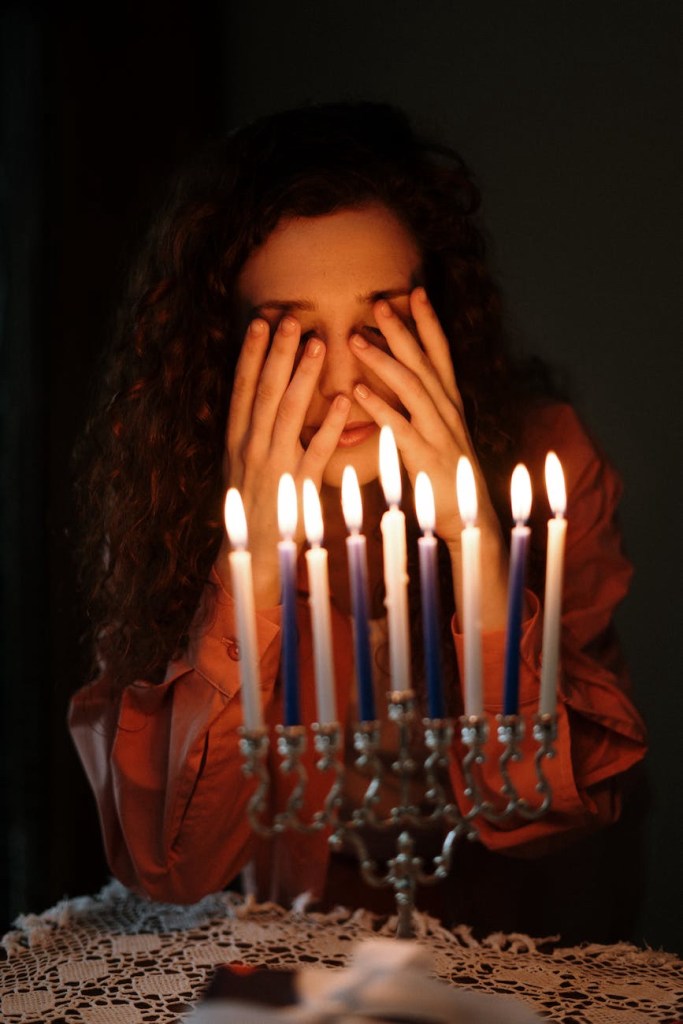
If interested in diving deeper into the biblical holidays laid out in scripture, I have linked a very useful and family oriented book below.






 Grit and Glitter
Leave a comment